The EPA recommends that you test your house for radon every 2 years, and retest whenever you relocate, make structural changes to your residence, or inhabit a previously extra level of a home. Take actions to fix the problem as soon as feasible if you have a radon degree of 4 pCi/L or even more. Up until I was detected with lung cancer cells, I really did not understand anything about radon.
We don't recommend it unless you have specialized radon mitigation expertise. Radon mitigation is not simply an issue of placing an opening in the ground that's affixed to a follower.
Does Radon make you tired?
The more uranium there is, the more radon there is. That makes radon the second leading cause of lung cancer after smoking. But even minor symptoms like headaches, feeling unusually tired, itching or burning eyes, irritated skin, nasal congestion, a dry throat or nausea could be due to your home's indoor air quality.
Geology and Human HealthTopical Resources.
It is a Learn more here so-called "inert" gas, which implies that the element radon does not conveniently react with various other materials. When the radon decays, it sends out ionising radiation containing alpha bits. The EPA, HUD and also AARST interacted to develop requirements for radon testing and mitigation in multifamily real estate.
Just one in seven of these deaths were caused by radon direct exposure alone, with 6 out of 7 triggered by cigarette smoking in mix with radon direct exposure. The cost-effectiveness of treatment programs was computed as the proportion of net adjustment in cost to net adjustment in cancer deaths stayed clear of (life years as well as QALYs acquired). This enabled the different radon plans to be compared to each other.
How much does it cost to run a radon fan?
Known risk factors for lung cancer include: Risk by age: About two out of three lung cancers are diagnosed in people over age 65, and most people are older than 45. The average age at diagnosis is 71. Family history: Genetics may predispose certain people to lung cancer.
Some remains listed below the surface and liquifies in water that flows as well as gathers under the ground's surface area. According to Health Canada, radon is connected to around 16% of all lung cancer cells fatalities in Canada.
That makes radon the second leading root cause of lung cancer after smoking. Radon is a radioactive gas that comes from uranium in the ground. Uranium is anywhere, and when uranium begins to damage down it develops a gas known as radon. So possibilities exist are higher radon levels in areas where uranium is extracted. We are regularly exposed to pollution, toxins, chemicals, gases-- even radon.
Radon mitigation is recommended if a short-term follow-up examination is done and also the outcome is 4 pCi/L or greater. If the standard of the follow-up as well as initial temporary tests is much less than 4 pCi/L, consider screening once again at some time in the future. A long-lasting test provides an analysis that is more probable to reflect the building's year-round average radon level than a temporary test. As a result of season variations in radon degrees, the closer the long-term dimension is to 365 days, the more representative it will be of yearly typical radon degrees.
How do you get rid of radon gas in a basement?
The radon fans are guaranteed by manufacturers for 3 – 5 years. Their replacement cost, including installation, is usually $300 to $600. Homeowners are aware that the fan must run continuously 24/7, year after year. The typical estimate of the electricity cost is $150 per year.
The 2010 examination discovered that 293 colleges in 77 districts ignored state guidelines issued in 1991 that called for all institutions to undergo radon screening. In Denver Public Schools, where screening was done and high levels of radon were located, couple of institutions did anything to rectify the trouble or retest the classrooms at a later date.
Who pays for radon mitigation buyer or seller?
There's no single method that fits all radon removal system needs. Common techniques include: Sub-slab depressurization, where suction pipes are inserted through the floor or concrete slab into the concrete slab below the home. A radon vent fan then draws out the radon gas and releases it into the air outside.
Radon in Residences.
Is radon really a big deal?
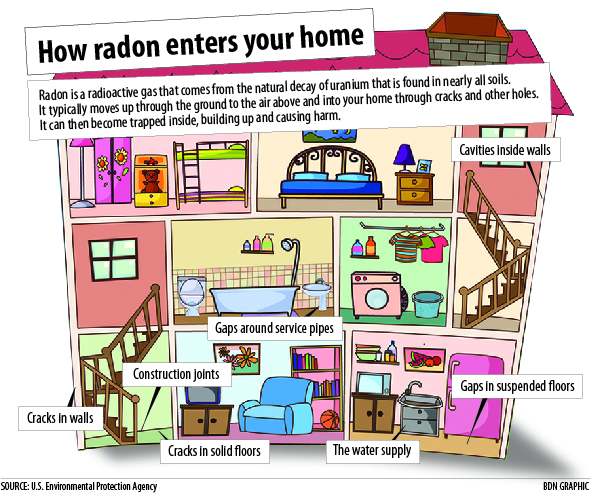
Radon is a radioactive gas that has been found in homes all over the United States. It comes from the natural breakdown of uranium in soil, rock, and water and gets into the air you breathe. Radon typically moves up through the ground to the air above and into your home through cracks and other holes in the foundation.
Below ground mines now have features to lower levels due to the fact that radon is known to be a health and wellness risk. A selection of techniques can be made use of to lower radon levels in your house, such as sealing splits in walls and floorings or boosting ventilation with "sub-slab depressurization" utilizing pipelines as well as fans.
- The only way to recognize if the degrees in your home are greater than what is considered "risk-free" is to test.
- This triggered a nationwide panic-- house owners feared their house may have similarly high levels.
- EPA's Indoor Environments Division offers a Web site pertaining to indoor air high quality concerns, consisting of radon, bronchial asthma, and environmental tobacco smoke/secondhand smoke.
- If you get water from a public water system, learn whether the comes from a surface (lake, tank, or river) or a ground water (underground) resource.
- You may be being subjected to high level of radon under the incorrect pretense that you are secure because you have a mitigation system if you don't perform routine follow-up testing.
Can you smell radon?
The “safe” level of radon exposure is no radon at all. The EPA's recommended level for radon mitigation is 4.0 pCi/L or above. It's estimated that 1 https://www.mylubbocktv.com in 15 American homes have an elevated level of radon gas.
Where is Radon most commonly found?
There's no single method that fits all radon removal system needs. Common techniques include: Sub-slab depressurization, where suction pipes are inserted through the floor or concrete slab into the concrete slab below Is it safe to live in a house with radon? the home. A radon vent fan then draws out the radon gas and releases it into the air outside.
What causes radon?
Being exposed to radon for a long period of time can lead to lung cancer. Radon gas in the air breaks down into tiny radioactive elements (radon progeny) that can lodge in the lining of the lungs, where they can give off radiation. This radiation can damage lung cells and eventually lead to lung cancer.
Can I install my own radon mitigation system?
In most cases, pros charge about $1,500 to install a radon mitigation system, but you can do it yourself for only about $500 in materials. So if you're fairly handy and have some carpentry, plumbing and electrical skills, you can install your own system in a weekend and save yourself a thousand bucks!
Who is most at risk of lung cancer?
The more uranium there is, the more radon there is. That makes radon the second leading cause of lung cancer after smoking. But even minor symptoms like headaches, feeling unusually tired, itching or burning eyes, irritated skin, nasal congestion, a dry throat or nausea could be due to your home's indoor air quality.
What is involved in radon mitigation?
Mitigation of radon in the air is accomplished through ventilation, either collected below a concrete floor slab or a membrane on the ground, or by increasing the air changes per hour in the building. Treatment systems using aeration or activated charcoal are available to remove radon from domestic water supplies.
How common is radon in a home?
It's common: About 1 in every 15 homes has what's considered an elevated radon level. The gas is odorless and invisible, says the EPA, and it causes no immediate symptoms, so the only way to know if your home is affected is by testing your individual residence.
What are the signs of radon poisoning?
There are no safe radon levels. Any exposure to the gas, no matter how small, can cause damage to the DNA in your lung, the lower the levels found in your home, the lower the risk you have of developing lung cancer.
How much does radon cost per gram?

Radon is available at a cost of about $4/mCi.
How bad is a radon level of 8?
The EPA strongly recommends radon mitigation if your radon levels are above 4 pCi/L. While radon levels below 4 still pose a health risk. They recommend you consider mitigation if your radon levels are between 2 and 4 pCi/L. They are quick to point out that there is no known safe level of radon.